Insights

Report: Health disparities in employer-sponsored insurance

August 15, 2023

With 180 million covered lives, employer-sponsored insurance (ESI) is the most common type of coverage in the U.S., and offers access to high-quality health care for many consumers. But despite significant investments in health care by both employers and their employees, some populations see stark disparities in access to services and health outcomes. Some of these disparities have lessened over time, while others stubbornly persist.

The findings of this assessment present an important snapshot of health outcomes and disparities among individuals with ESI prior to the onset of COVID-19. Some of the most significant disparities appear to be associated with income differences, while others vary by race and sexual orientation, even when controlling for other factors.

Download the full report

Dan Mendelson

The disparities highlighted by this report do not exist in a vacuum. Some aspects of the American health care system deepen these disparities, and in turn, health care disparities create downstream impacts on employee productivity and businesses’ success.

Dan Mendelson

Chief Executive Officer, Morgan Health

Read more

Key findings:

  1. Lower-income individuals with ESI are less connected to basic health care.
  2. Lesbian, Gay and Bisexual (LGB) individuals with ESI experience greater mental health needs and substance use.
  3. Black, Hispanic and Asian individuals with ESI had significantly better mental health and lower rates of substance use than white counterparts.
  4. Black, Hispanic and Asian populations with ESI interacted with their health care with varying levels of affordability and notable gaps in preventive care.
  5. Black and Hispanic individuals with low-risk pregnancies delivered by cesarean section at higher rates.

Copyright © 2024 JPMorgan Chase & Co. All rights reserved.

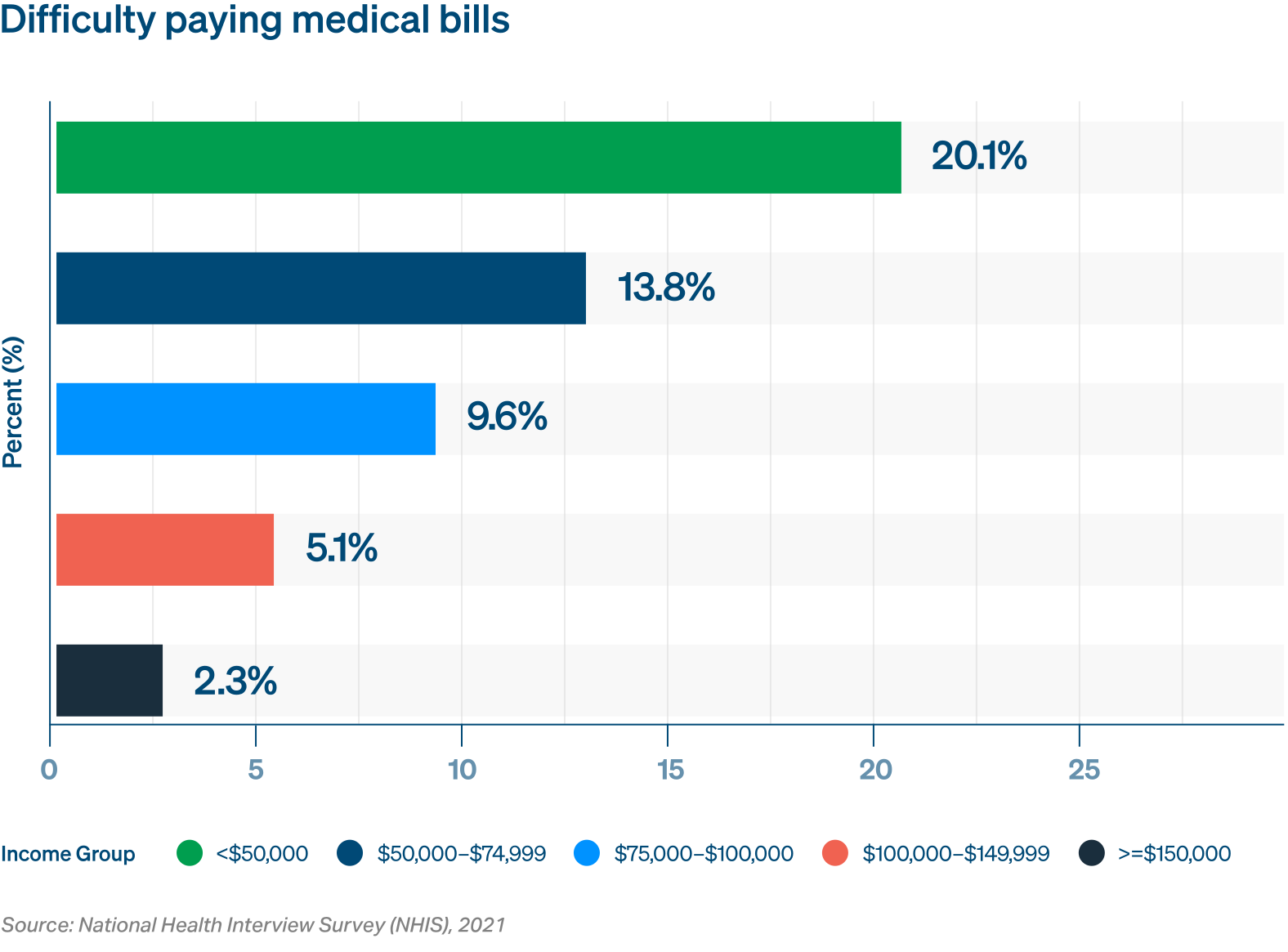
Chart 1: Difficulty Paying Medical Bills

20.1 percent of enrollees with income under $50,000 per year, 13.8 percent of enrollees who earn between $50,000 and $74,999, 9.6 percent of enrollees who earn $75,000 and $100,000, 5.1 percent of enrollees who earn between $100,000 and $149,999, and 2.3 percent of enrollees who earn $150,000 or more per year report difficulty paying medical bills.

Copyright © 2024 JPMorgan Chase & Co. All rights reserved.
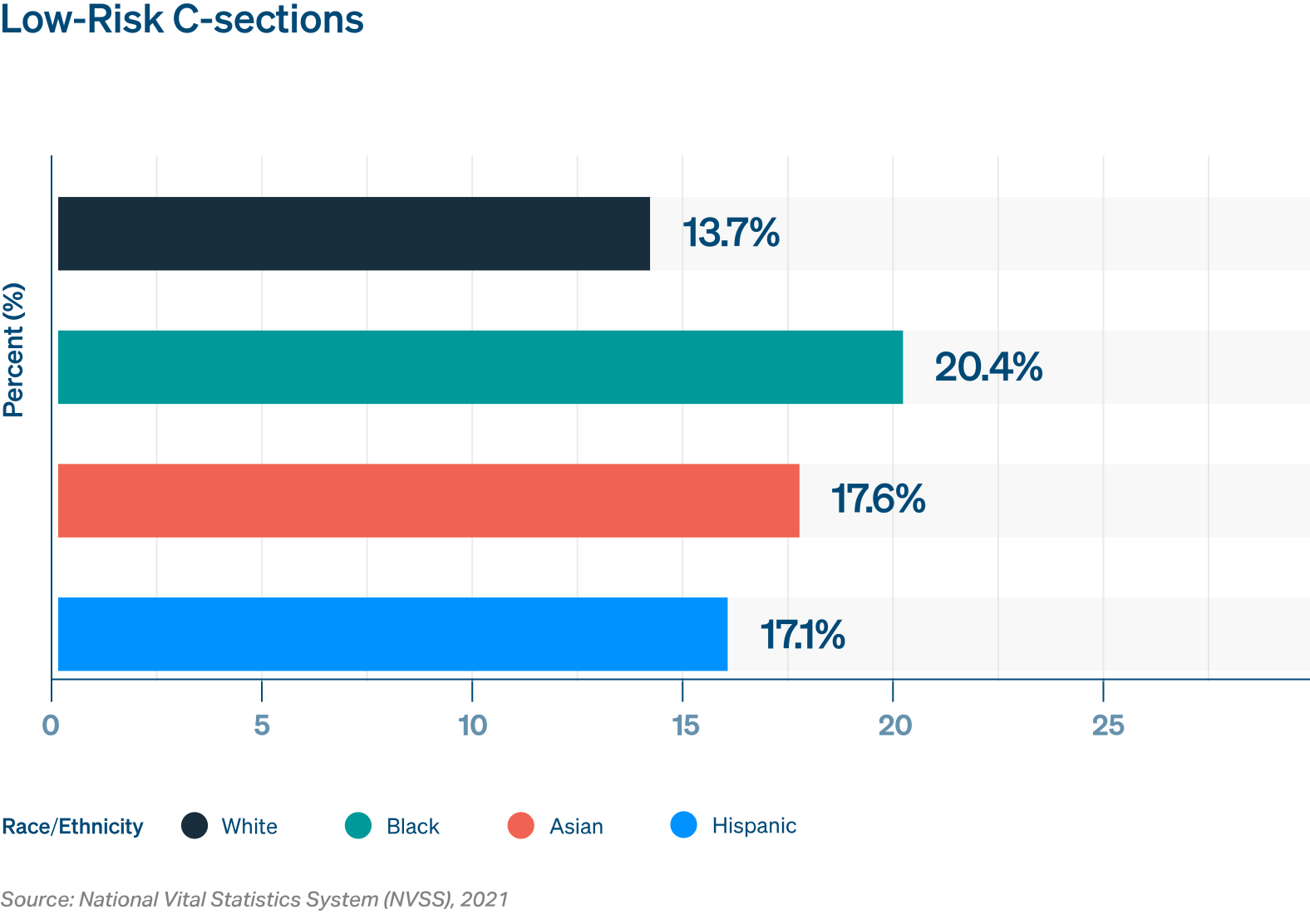
Chart 2: Low-risk C-sections

Among enrollees with low-risk pregnancies, 13.7 percent of White enrollees, 20.4 percent of Black enrollees, 17.6 percent of Asian enrollees, and 17.1 percent of Hispanic enrollees had c-sections.

It is our hope that these findings help employers take action to reduce disparities and improve health outcomes across their plan membership. With that in mind, we offer six key recommendations:


  1. Introduce income incentives for lower income employees to access primary and preventive care.
  2. Expand mental health and substance use support for all employees, with particular emphasis on LGB communities; consider incentives for LGB individuals to access mental health care.
  3. Consider tailored preventive care services, such as culturally sensitive or population-specific primary care, which emphasize subpopulations’ unique needs and use targeted patient engagement strategies.
  4. Use employee resource groups as a channel for connecting less engaged employee subpopulations to relevant care options.
  5. Offer doula services and ensure midwifery care is available, both of which are associated with lower rates of cesarian sections for low-risk pregnancies.
  6. Consider additional support for employees to find lower cost, high quality care, such as publishing quality scores for in-network providers or steering employees toward new price transparency data tools.

No results found

Adjust your filter selections to find what you’re looking for.